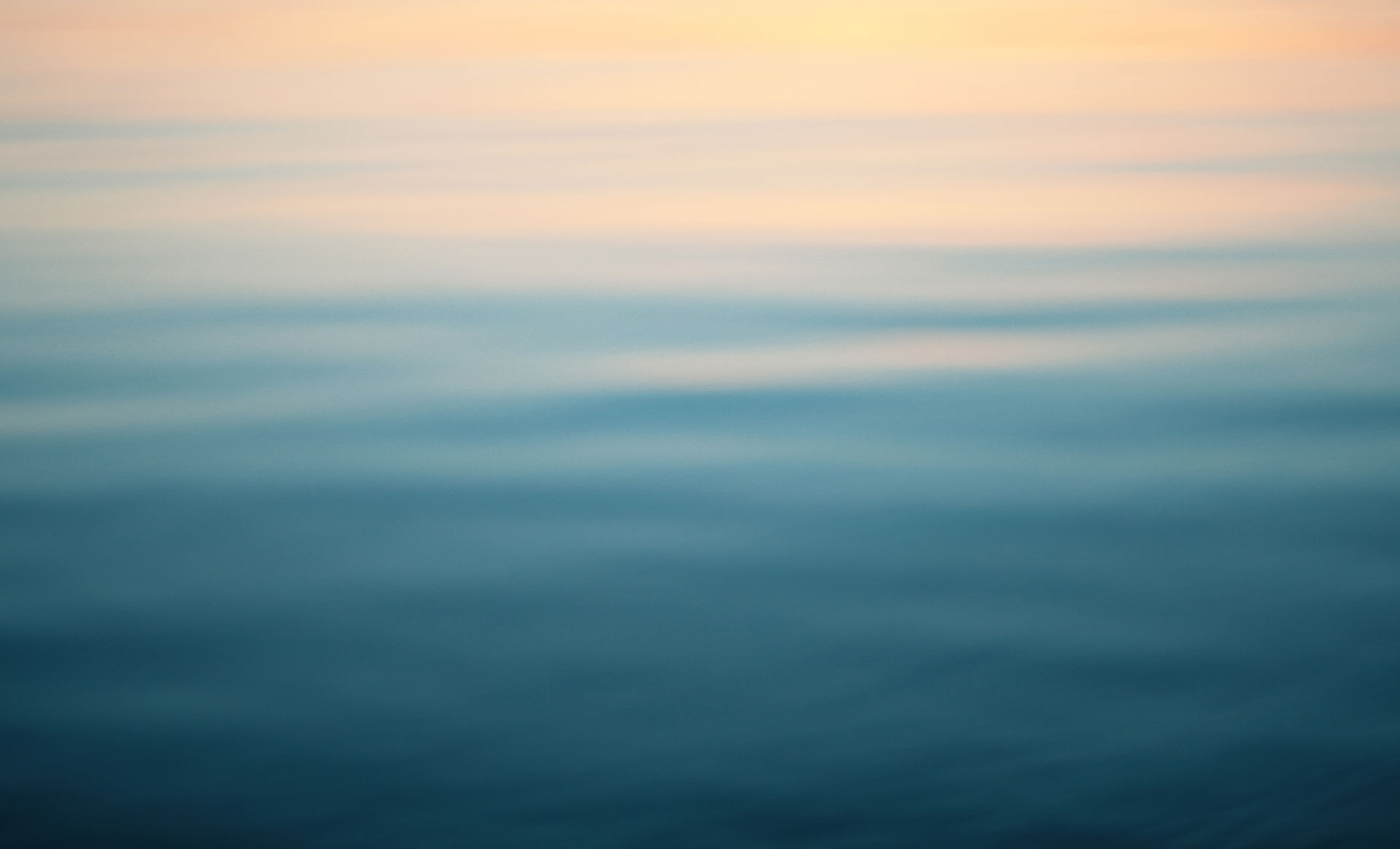


Minimalism : That can best be lowest
I spoke in a previous article of the importance of varying styles and places in case of loss of inspiration, and it is a fact, a necessity. If you've been following me for a while and have had the opportunity to view my photos (if you're there, I guess that's the case ^^), you know how important I'm to black & white, no matter the style, it is indeed a long love story between him and me.
Yet there is a genre in photography that is rarely exploited because for some it seems uninteresting, where people do not know, alas, where to start ... Minimalism!

The minimalist style is a genre in photography that appeared with contemporary art in the 20th century, towards the end of the 1950s in the USA, in reaction to the pictorial extravagances of Abstract Expressionism that saw the birth of Pop Art, and whose apogee materialized by Andy Warhol's arrival on the media scene in the late 1960s. However, the exact origin, in photography, of the appearance of minimalism remains vague, not to say unknown.
This photographic style is much more difficult to achieve than people think. You have to develop a sense for aesthetics before producing interesting minimalist works. It is probably for this aesthetic side that the world of advertising is rather fond. Just look at advertising posters, graphic design sites, or anything related to Advertising 2.0 to realize that minimalism is in the air, everywhere, more than ever, even if it is has its roots almost sixty years ago. So this style can be a way to explore, in case of failure of inspiration, because everything around us can be a potentially valid subject for this type of image, even if the urbanism is much more often through social networks. A simple flower lost in the middle of a field, a boat alone on a lake without wave, or why not, your shadow on a wall, all these subjects have the potential to make good minimalist photos, the goal being to seek to achieve an image at once simple, beautiful, whose general appearance will be a feeling of perfect balance between a "full emptiness" that you will have as a task to perfectly compose. To realize a work at the same time beautiful aesthetically, and stripped of all artifice.

Geometry is also important, a uniform background that fits very well with this photographic style. This one can be with or without line, with or without dominant color so as not to interfere with its reading. If there are lines in your picture, they must be parallel to each other, for example. The subject must have as many clean forms as possible. A single subject, isolated, abandoned, can bring a unique vision and make excellent minimalist images. In fact, the more your image is simplified, sober, no frills, and more it will correspond to the rules, the principles of this particular style. But to master this style, you need great talent, perseverance, and know how to compose an image as it should. Your subject will preferably be placed on a strong point of the image, respecting the rules of the thirds. This visual "hook" will make your composition stronger. Your subject should become the focus of your photo, as if nothing else existed except this one. The colors in a minimalist image are very important, except in case of black and white of course, because promotes simplification at its maximum, your goal, remember, being simple. The more simple your shot, the more your final image will fit the minimalist basic criteria.
Simplicity and balance, that sums up well the minimalism in its original state.
Photos : ©Copyright Ludovic Lavogez


Commentaires